

PayPal’s rise from a peer-to-peer email payment tool into one of the most widely trusted transaction platforms in the world did not happen by accident. For sports fans navigating an increasingly digital betting and gaming landscape, the question of which payment method to trust with their money is not abstract. It is immediate and practical.
PayPal has answered that question more convincingly than almost any competitor, built on decades of infrastructure refinement, a privacy model that shields users from third-party exposure, and a compliance posture that has earned it preferred status across licensed sports betting markets. Understanding why sports fans gravitated toward PayPal requires tracing both the platform’s evolution and the specific security demands of digital wagering.
From Confinity to Commerce: The Foundation of Trust
PayPal’s origins stretch back to December 1998, when Peter Thiel, Max Levchin, and Luke Nosek founded a company originally called Confinity in Mountain View, California. The initial concept involved security software for handheld devices, but the team pivoted to digital payments after a company engineer produced an email-based payment technology in October 1999.
By March 2000, PayPal had already cleared the one million customer milestone, with roughly 40% of eBay transactions flowing through the platform almost immediately after the two services connected. PayPal went public in February 2002, raising $70.2 million in its IPO and closing its first day of trading at $20 per share with a market cap of approximately $1.2 billion.
Later that year in October 2002, eBay acquired PayPal for $1.5 billion, making it the official payment provider for the auction giant. eBay then spun PayPal off as an independent company again in 2015. That full arc, from startup to acquisition to independence, gave PayPal institutional credibility that few payment startups can manufacture.
The Privacy Shield That Sports Fans Actually Need
For anyone depositing at an online sportsbook or gaming platform, the worst-case scenario is a data breach that exposes bank account numbers or card details to criminal actors. PayPal eliminates that specific risk through its role as a third-party intermediary. When a bettor funds an account through PayPal, the receiving platform never sees the underlying bank account number or card information.
PayPal processes the transfer entirely within its own encrypted environment, and the sportsbook receives only confirmation that payment was made. If the sportsbook is later compromised, the attacker acquires no usable financial data from PayPal transactions. The platform uses 256-bit encryption across all transactions and employs a dedicated team specifically focused on preventing cyber fraud and identity theft.
This privacy-by-design model is, for many sports fans, the single most compelling reason to use PayPal over direct card deposits, particularly after years of high-profile data breaches at major retailers and financial institutions.
Legal Sports Betting and the PASPA Inflection Point
PayPal’s relationship with U.S. gambling has a complicated history. After the eBay acquisition in 2002, PayPal suspended processing deposits and withdrawals to online gambling sites. It reemerged in that space in September 2015 when online gambling became legal in states including Nevada and New Jersey.
The real acceleration came on May 14, 2018, when the U.S. Supreme Court overturned the Professional and Amateur Sports Protection Act, opening the door for states to legalize sports betting. As legal sportsbooks launched across the country, PayPal became a featured payment method almost immediately.
By 2025, it was widely accepted across sports betting markets in New Jersey, Pennsylvania, Michigan, Illinois, Colorado, Arizona, Indiana, Tennessee, and West Virginia, among others. The structural reason PayPal earns approval where direct bank transfers are sometimes blocked is that it can serve as a reliable intermediary even in cases where a bettor’s bank or credit union declines gambling-related transactions directly.
Scale, Speed, and the Numbers Behind the Dominance
The numbers behind PayPal’s current position are difficult to overstate. Users completed 25.355 billion transactions on the platform in 2025, producing a record $1.79 trillion in total payment volume for the year. PayPal holds a 44.1% share of the global online payment market, operating across more than 200 countries and territories and processing transactions in approximately 140 different currencies.
Over 36 million merchants worldwide relied on PayPal as of 2025, and more than 10.3 million websites offer it as a checkout option. Roughly 82.8% of the top 1,000 online retailers in North America are PayPal-compatible. The platform processes over 50,000 transactions per minute globally, and the average PayPal transaction in 2025 was $70.75, up 10.8% from the previous year.
For sports bettors depositing and withdrawing across multiple platforms, that operational scale means near-instant processing even during peak wagering events like major playoff games or championship weekends.
Why PayPal’s Compliance Model Earns It Access
PayPal does not partner with gambling platforms indiscriminately. To be approved as a payment processor by PayPal, a U.S. sportsbook or casino must demonstrate that it can block residents from illegal gambling activity in states where it does not hold a license. This vetting process means that a PayPal-accepting platform carries an implicit credibility signal: it has been reviewed and approved by a company with institutional-grade compliance standards.
This is especially visible when reviewing a list of PayPal casinos, popular sites across states, where the common thread among the highest-rated options is that each holds a valid state license and operates within the regulatory framework PayPal requires. The only PayPal-compatible gambling sites a user can access through their PayPal account are, by design, legally operating in that user’s jurisdiction.
The platform’s geo-location technology identifies the user’s state before authorizing a transaction, adding another layer of protection that direct card deposits cannot replicate.
Withdrawal Speed as a Loyalty Driver
Sports fans who win do not want to wait three to five business days for their money. PayPal’s withdrawal performance has become one of its most differentiating features in the betting context. FanDuel processed PayPal withdrawals in under two hours in 2026 testing, while bet365 consistently delivered funds within a one to four-hour window.
BetMGM withdrawal processing is generally instant after approval, with a $10 minimum. FanDuel’s PayPal withdrawals carry a $10 minimum and process within twelve to twenty-four hours in most cases. These timelines stand in sharp contrast to wire transfers or check-based withdrawals, which can take a week or more.
The reason PayPal achieves these speeds is its internal liquidity system: because the platform holds pre-funded balances, it can release withdrawal funds from its own reserves before the underlying bank transaction completes, essentially advancing the payout. For sports bettors who transact frequently during live events or active betting seasons, that speed difference is meaningful enough to determine platform loyalty.
Two-Factor Authentication and Buyer Protection as Security Layers
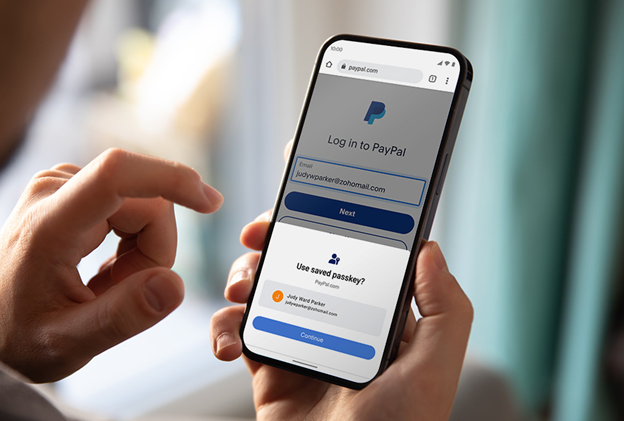
Beyond encryption and intermediary status, PayPal offers two practical security features that matter specifically to sports fans making frequent transactions. Two-factor authentication requires that a login be confirmed through a secondary device, making it significantly harder for unauthorized users to access an account even if a password is compromised.
PayPal’s buyer protection policy covers unauthorized transactions up to $100,000, which provides a recourse mechanism that direct bank wire transfers do not offer. This protection framework, combined with the platform’s round-the-clock fraud monitoring, means that even in the event of unauthorized account activity, users have a structured process for recovering funds.
The combination of 2FA, buyer protection, encryption, and continuous fraud monitoring creates a multi-layered security model that most payment methods, including direct debit, direct bank transfer, and prepaid cards, cannot match in depth.
The Participation Economy and What Comes Next
PayPal’s 2025 total revenue reached $33.2 billion, up 4.32% year-over-year, with 89.8% of that revenue coming directly from transactions.
The platform’s active account base reached 438 million by mid-2025, and its Buy Now, Pay Later volume is projected to grow from approximately $33 billion to $40 billion in the same period. From 2018 to 2025, PayPal’s total payment volume increased 210%, equivalent to a compound annual growth rate of 17.6%. For sports fans, this growth trajectory matters because it reflects a platform that continues to invest in infrastructure, compliance tooling, and fraud prevention rather than coasting on a legacy reputation.
As additional U.S. states legalize online sports betting and casino gambling in the years ahead, PayPal’s existing compliance relationships and its position as the dominant third-party payment intermediary will make it the default choice for millions of new bettors entering legal markets for the first time.