

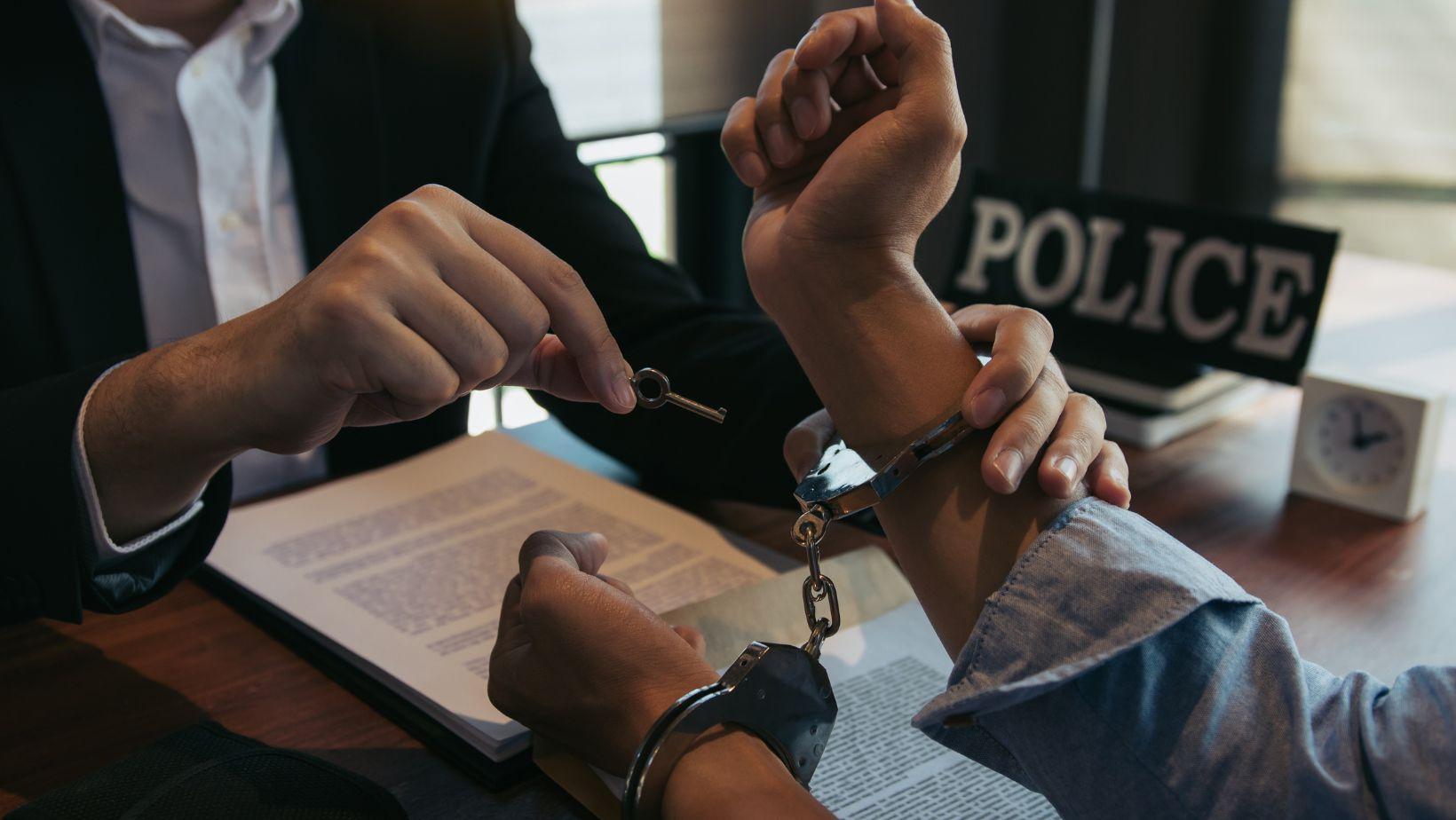
The worst part isn’t the handcuffs. It’s the twelve hours after, when the phone hasn’t rung yet, nobody has given you a court date, and you’re trying to figure out if your life just changed forever or if it’s mostly a paperwork problem.
Here’s the short answer: nothing about a drug arrest is instant. Criminal charges move through stages, and each stage gives you a chance to respond. Booking happens first. Then a bond decision, an initial court appearance, lab work on whatever police took, and eventually a charging decision or a resolution. Rushed lawyers and bad TV make it look like one big thing that happens at once. It isn’t. It’s three weeks of small doors opening and closing.
Knowing which door you’re standing in front of keeps you from panicking in the wrong hallway.
The steps below are the same whether you got pulled over on Highway 61 or picked up near the courthouse square. So here’s the playbook, in the order things actually happen, plus the part almost nobody explains until it’s too late.
The First 72 Hours: My Three-Layer Framework
I call this the three-layer test, mostly because it’s how you should split your attention when everything feels urgent at once.
Layer one is your body and your whereabouts. Release, bond, and court notice. You want to be home, medication sorted, able to show up. Miss layer one and you never get to layer two.
Layer two is the paper trail. The arrest report, the citation or warrant number, the property sheet for anything seized, and any statement you gave. This is the layer most people ruin by giving a statement at the station because they thought honesty would resolve it. It won’t.
Layer three is the strategy. What charge gets filed, whether the stop itself is challengeable, whether diversion exists for your situation, whether the evidence chain holds up.
Most criminal defense advice online is layer three advice given to people who haven’t survived layer one. You’ve got to stack them.
A Drug Arrest Follows a Predictable Sequence
Once you’re booked, the case moves into a rhythm. It goes like this, roughly in order.
- Booking and release. Booking is fingerprints, photographs, and an inventory of property. What happens next depends on the county and the charge. Some people post bond within hours, some get a court date and go home on their own recognizance, and some wait for a judge to set terms.
- Prosecutorial review. Investigators send the file to the district attorney’s office. Charges get formalized or dropped. This window is where a lot of people think they’re supposed to call and explain themselves. That’s the worst instinct in this entire process.
- Arraignment. Your first scheduled court appearance. The charge is read, you’re told the maximum exposure, and you either answer or have your lawyer do it.
- Discovery and testing. This is the long stretch. The state produces the police narrative, body camera footage if it exists, and laboratory results for anything seized.
Now here’s the part that catches people: lab testing can take longer than you’d expect, and it can matter more than you’d think. According to research from the National Institute of Justice, forensic backlogs have been a persistent problem in drug cases for years, which means your case may sit in a queue you can’t see or influence. If testing takes eight weeks, your case may sit for eight weeks. Use that time instead of counting it.
Possession, Distribution, and Trafficking Aren’t the Same Beast
Here’s where I’ll plant a flag: the single biggest thing that determines how your case ends isn’t the amount of sympathy a judge feels for you. It’s the charge. Possession or casual exchange sits in one world. Distribution, manufacturing, and trafficking sit in another with steeper exposure and different rules.
I can’t tell you which one applies to you, because it turns on quantity, packaging, statements, and how prosecutors like to characterize intent. What I can tell you is that people assume their charge is what the officer said at the scene. It often isn’t. Officers charge what they can justify. Prosecutors decide what to actually file, and they don’t always agree.
There’s also the geography problem. Court culture in Anderson County doesn’t move like court culture in a bigger metro. In a mid-sized county, the same six prosecutors, public defenders, and clerks see the same judges every week. Files get read carefully rather than skimmed between forty defendants in one morning. That cuts both ways, and knowing which way your particular file is being read matters.
How Bond and Release Conditions Actually Work in Anderson County
Release is the thing people want to know about first and understand last. Bond is not the same as your charge, and paying it doesn’t make the case go away. It buys you the ability to walk back in the front door of the courthouse on your own terms instead of riding in from the back.
|
Stage |
What’s decided |
What you do
|
|
Booking |
Identity, records, custody status |
Say nothing about the events. Ask about bond procedures. |
|
Bond or recognizance |
Whether you leave and under what conditions |
Show up. Follow every condition exactly. |
|
Arraignment |
Formal charging and next date |
Enter an appearance through counsel. |
|
Pre-trial stretch |
Discovery, testing, negotiation |
Do your court-ordered obligations. Do not contact anyone involved. |
|
Resolution |
Diversion, plea, dismissal, or trial |
Decide with your attorney, not with a friend’s cousin. |
Court-ordered conditions are not suggestions. If you’re ordered to keep clean, show up for classes, or check in by phone, those small obligations become the record a decision-maker reads later. Miss a check-in and you’ve given the state a clean reason to pull you back in without ever arguing about the actual charge.
Why the Evidence Chain Decides More Cases Than You’d Expect
Prosecutors don’t just read the report and take it as gospel. They evaluate whether the stop was lawful, whether the search fit within legal limits, whether your statements were made voluntarily, whether the seized items were handled correctly from the traffic stop to the lab, and whether the lab results match what’s described in the report.
That’s where the boring paperwork becomes interesting. Chain-of-custody gaps, missing field test documentation, body camera footage that cuts off, and inconsistent accounts between officers are the kinds of things that change conversations about charges. You can’t manufacture those issues, so the practical move is to preserve everything early.
Save texts, screenshots, and messages from the day. Write down your own account while it’s fresh. Note the officers’ names, the street, the time, and who else was there. None of that is a defense by itself, but all of it is raw material a lawyer can use later while it still exists.
Diversion, Plea, Dismissal, or Trial
Not every case should go the same way, and anyone who tells you otherwise is selling something. Some people qualify for diversion, where the charge can be resolved without a conviction if conditions are met. Some cases end in a negotiated result. Some get dismissed because the evidence doesn’t support what’s alleged. A few go to trial, and that’s usually a decision made late, once discovery is complete and everyone knows what the lab actually found.
Eligibility for diversion is fact-specific, so treat any general statement about it as a starting point, not a promise. What courts across the country look for is broadly similar though. According to employment data from the Bureau of Labor Statistics, corrections and legal support work is a sizable slice of the American workforce, and much of that machinery exists to process cases through options exactly like these.
Here’s my honest read on the choice most people face. If you have a clean record and a case where the evidence is thin or the stop is questionable, fighting the charge is usually worth the risk. If the proof is strong and you’re facing serious exposure, a negotiated result that keeps you out of custody is often the smarter call than a trial you’re likely to lose. Anyone who tells you there’s a stubbornly correct answer before reading your file is guessing.
What Actually Helps Your Case, and What Hurts It
Keep court dates. That’s the entire game for the first month. After that:
- Stop discussing the case with anyone. Friends get subpoenaed. Group chats get screenshots. Nobody is as loyal as you think at 2 a.m.
- Do not contact the arresting officers, the alleged victim, or any witness. Ever. That’s a separate charge waiting to happen.
- Preserve your own materials: receipts, timestamps, phone logs, anything that places you somewhere or shows ordinary behavior.
- Handle the small obligations early. Completing a court-ordered requirement is far easier than explaining why you didn’t.
- Read everything you sign. Never sign a document in a courthouse hallway because someone says it’s routine.
If you’re sitting in Anderson County with an arrest that just happened, the honest truth is that nobody can tell you how it ends yet. Not the officer, not the bondsman, not the guy in the intake cell who claims he knows how these things go. What you can control is how quickly you get organized.
According to population data from the U.S. Census Bureau, Anderson County is a small community where cases still move through a real local court with real local attention. That cuts in your favor if you treat this as a sequence to work through rather than a disaster to react to. Understanding what happens after a drug arrest in Clinton, TN starts with the timeline, not the panic, so get your dates in order, keep your mouth shut, and talk to someone qualified before your first court appearance rather than after it.