

Everyone remembers that specific era of aesthetics. It was the time of the “Instagram face”—razor-sharp jawlines, high-tension cheekbones, and lips that seemed to arrive in a room five minutes before the person did. It was a look defined by instant gratification. You walked into a clinic, sat for twenty minutes, and walked out with a new set of features. But lately, the wind has shifted. People are looking at those frozen, overly voluminous faces and realizing that maybe more isn’t actually more. We are seeing a massive pivot toward what experts call the “refreshed” look, where the goal is to look like you’ve had a really great nap rather than a really expensive syringe.
The conversation has moved away from simply filling a hole or a fold. Instead, it is about biological longevity. We are moving into a phase where the best work is the work nobody can actually point to. It’s a subtle game of internal architecture. This shift isn’t just a trend; it’s a reaction to the “overfilled” syndrome that left many looking puffy, distorted, or even older than they actually were.
The Problem with the Quick Fix
Traditional fillers serve a purpose, certainly. They use hyaluronic acid to physically occupy space. It is a mechanical solution to a biological problem. When you have a deep line, you put something under it to push it out. Simple. However, when this is done repeatedly over years, the face can start to lose its natural movement. The weight of the gel can cause a slight heaviness, and the skin can begin to look stretched or “doughy.” This is the “overfilled” look that has become a cautionary tale in modern aesthetics.
People are waking up to the fact that their faces are dynamic. We smile, we squint, we talk. A face that is packed with too much synthetic volume doesn’t move quite right. It becomes a mask. This realization is exactly why the industry is pivoting toward treatments that don’t just sit there. The modern patient wants their skin to behave like it did ten years ago, not just look like it has been inflated.
Enter the Biostimulator
This is where the real analysis begins. If we stop thinking about “filling” and start thinking about “rebuilding,” the entire strategy changes. Collagen biostimulators are the heavy hitters in this new era. They don’t provide that “pop” of volume the second the needle comes out. In fact, for the first few days, you might look exactly the same as you did before you walked in. But that is the point. These substances are essentially messengers. They are injected into the deep layers of the tissue to tell your body that it’s time to get back to work.
Why Stimulation Beats Filling:
- Natural Integration: Because the volume comes from your own collagen, it moves with your muscles. No “shelf” effect when you smile.
- Skin Quality: Unlike a filler that just stretches the skin, stimulation improves the actual thickness and bounce of the dermis.
- Longevity: While a standard filler might last six to nine months, the results from biological stimulation can stay vibrant for two years or more.
- Subtlety: The change happens over months. Your friends will think you changed your skincare routine or started doing yoga; they won’t ask who your injector is.
The real magic happens in the way the body responds to these micro-particles. When a practitioner decides to purchase sculptra for clinics, they are investing in a product that acts as a scaffold. This scaffold doesn’t stay there forever. It slowly disappears, but as it goes, it leaves behind a fresh, sturdy network of your own type I and type III collagen. This is the structural support that actually keeps a face from sagging. It is the difference between propping up a tent with a pole and actually reinforcing the fabric itself.
The Patient Journey Has Changed
We used to see people coming in for “nasolabial folds” or “marionette lines.” They were focused on specific cracks. Now, the approach is holistic. It’s about facial balancing. A skilled injector looks at the temples, the mid-face, and the jawline as a single ecosystem. By using long-term stimulators, they can restore the “global” volume of the face. This prevents that weird look where someone has perfectly smooth cheeks but hollow temples and a sagging neck.
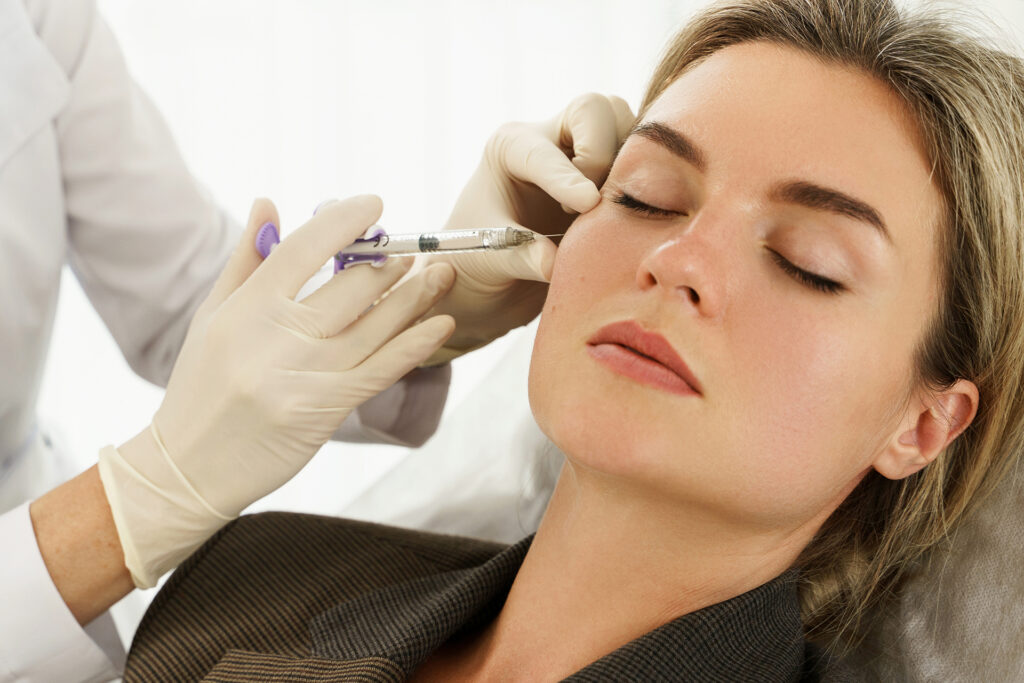
Patience is the new luxury in the beauty world. There is a certain prestige in a treatment that takes three months to fully show up. It suggests a level of care and a lack of desperation. The “overfilled” look is often the result of wanting a transformation by Friday night. The collagen-stimulated look is the result of a long-term plan. It is an investment in the future version of your face.
The End of the “Filler Face” Era
There is also a significant medical benefit to this shift. Over-filling can lead to issues with lymphatic drainage. When too much product is placed in the mid-face, it can impede the natural flow of fluids, leading to chronic puffiness under the eyes. By switching to collagen stimulators, practitioners are avoiding this “heavy” look. They are creating a tighter, leaner aesthetic that mimics the bone structure and fat pads of youth rather than the bloat of a cosmetic procedure.
Furthermore, the risk of migration is significantly lower. Because you are growing your own tissue, there is no gel to “slip” or move into places it wasn’t intended to be. The result is anchored. It is part of you. This is why the most high-end clinics are now prioritizing these regenerative treatments over the high-volume HA fillers that dominated the 2010s.
Building a Foundation
When we look at the trajectory of aesthetic medicine, it’s clear that we are heading toward a “pro-aging” rather than “anti-aging” philosophy. It sounds like a small distinction, but it matters. It’s about maintaining the integrity of the skin. We are finally moving away from the idea that a face is a balloon that needs more air. Instead, we are treating it like a garden that needs better soil.
The transition to long-term collagen stimulation represents a maturity in the industry. It’s a move toward science that respects human anatomy. The days of the “cookie-cutter” face are numbered; replaced by a preference for individuality, texture, and a silhouette that actually belongs to the person wearing it. It’s a slower process, sure. But in a world where everyone is starting to look the same, looking like a refreshed version of yourself is the ultimate flex.