


Roulette has always been really popular in the world of casino games. The wheel spins. The ball bounces. The table feels alive for a moment. It is one of the simplest games in the casino world. People have spent years trying to shape the randomness into something that feels more controlled. Some players enjoy the pure chance of it. Others bring their own systems to the table. They like patterns and structure. They like to feel as if they are guiding their own path through each spin.
Systems in roulette have been around for centuries. Some are detailed, some are simple. Some rely on steady increases in bets while others use slow steps. People use them for many reasons. Some feel they add direction to a session. Others say they make the game more fun because each spin becomes part of a plan. It is not about beating the wheel. It is about following a pattern that keeps the game moving in a certain style.
How the Martingale System Works
One of the most famous systems is the Martingale roulette strategy. It is simple. It is direct. Anyone can understand it within a minute or two. The idea is based on doubling bets after each losing round. A player who uses Martingale picks an even-money choice on the table. Red or black. Odd or even. Something that pays at a one-to-one rate.
The system starts with a small base bet. If the player wins…they return to the same base bet for the next spin. If the player loses, then the strategy changes to double the bet on the next spin. The point of this pattern is to recover the previous losses the moment a win arrives because that win pays enough to cover everything that came before it.
This pattern repeats over and over. A long streak of losses can make the numbers climb fast – the system remains the same. That rhythm is what some people enjoy, but it isn’t for everyone.
Martingale in a Roulette Example
Imagine a player starts with a $5 bet on black. The wheel spins. The ball lands on red. The next bet becomes $10 on black. If that spin also lands on red, the next bet becomes $20. If the third spin lands on black, the player collects the win and resets back to the $5 starting bet.
It does not take advanced math to follow this system. Each step is clear. The idea is to use the next win to wipe out the small line of losses and return to the low starting point. This pattern is one reason the Martingale is so widely discussed. It is not hidden behind formulas. It is easy to picture it in motion. The strategy is also used in some aspects of trading.
Other Systems in Games of Chance
Martingale is only one of many systems. Some players use softer versions that increase bets slowly. Others like systems that move upward when they win instead of when they lose. Some even use patterns that bounce up and down in small steps.
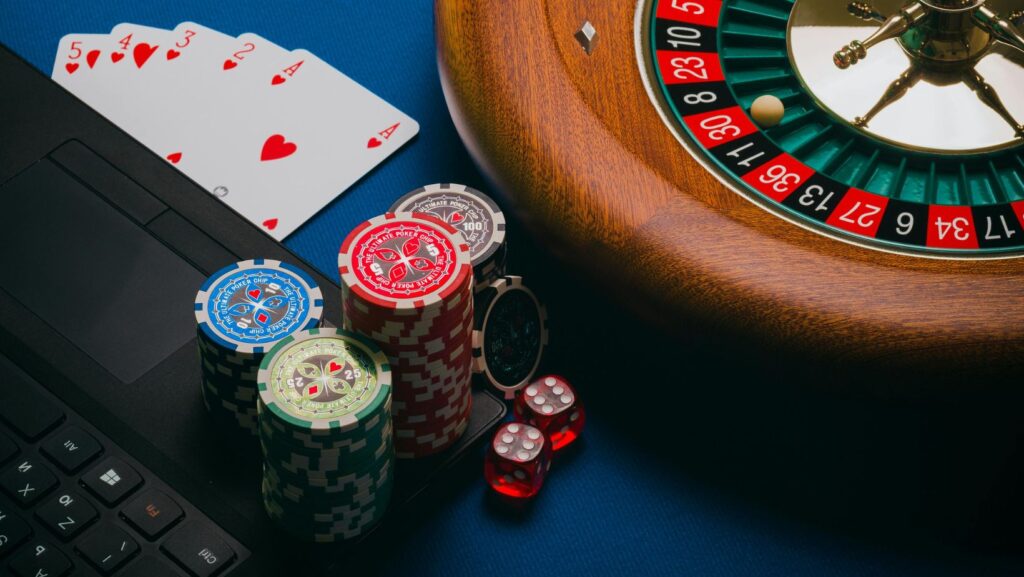
These systems show how people approach games of chance. Many players enjoy having a set structure to follow. It gives their session a rhythm and gives them something to track. It also creates a sense of control (though the wheel has no memory and each spin stands alone).
A few players create their own systems. They may track colors out of habit. They may switch sides when they feel the table needs a “fresh start.” These choices might not come from math. They often come from instinct. Roulette is a total game of chance, so there’s not always too much logic to it.
Why Systems Still Attract Players
People enjoy structure. It is the same reason puzzle games draw players even when the outcome is random. A system gives a kind of anchor. Roulette spins feel fast and scattered. A system shapes the pace and offers a steady plan for the next step.
Some players say a system makes long sessions more relaxed. They follow their pattern and let the wheel do whatever it does. The focus shifts from prediction to process. That shift can make the game feel smoother.
Never Any Guarantees
Roulette is still chance-based. The wheel does not react to past spins. A system cannot change that. It can shape the mood of a session. It can add rhythm. It can give people a plan. Yet no system can promise outcomes. Each round stands on its own.
Many players who use systems know this. They are not searching for certainty. They are searching for a style of play that feels satisfying. They pick a pattern that matches the way they like to approach games. Some like slow steps. Some like bold jumps. Some stay with even-money bets. Others shift around the board.
What matters most is that systems in roulette are part of the culture of the game. They have been used for generations and can add personality to each table. They reflect the way players like to shape their own experience at the casino…