

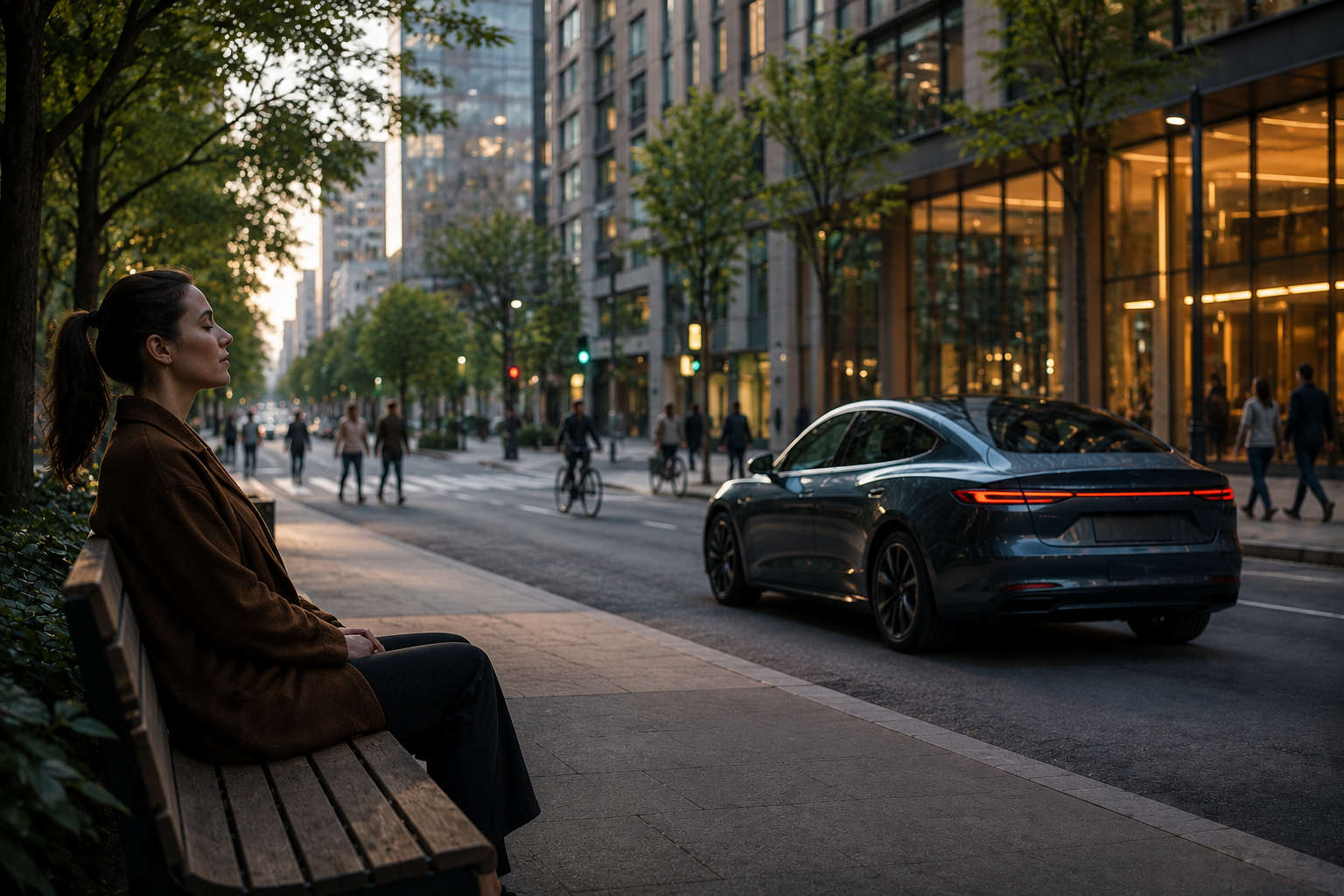
Cities have always had a soundscape. Not just a background hum, but a layered composition of mechanical life: combustion engines under strain, buses braking at intervals, motorcycles cutting through gaps in traffic, and the constant low-frequency noise of tyres on asphalt. For most urban environments, this sound was so constant it became invisible—noticeable only when it disappeared.
Electric vehicles have begun to change that balance. Not abruptly, but steadily enough that cities are starting to feel different even if we don’t always know why.
The Engine That Isn’t There
The most obvious difference EVs introduce is the absence of combustion noise. Internal combustion engines produce sound through a combination of mechanical movement, exhaust flow, and vibration. Even at idle, they generate a constant auditory presence that defines traffic density before it is even seen.
Electric motors, by contrast, operate with minimal mechanical noise. At low speeds, the dominant sounds become tyres on road surfaces and faint aerodynamic airflow.
This shift removes one of the primary cues humans have used to interpret traffic for over a century: engine sound as a proxy for movement, power, and proximity.
Urban Soundscapes Without Constant Load
In traditional traffic environments, sound levels remain relatively elevated even when vehicles are stationary. Idling engines, stop-start acceleration, and gear changes create a persistent acoustic baseline.
Electric vehicles disrupt this pattern. In congested areas, the overall noise floor drops noticeably when EV penetration increases. The result is not silence, but a thinning of constant mechanical pressure.
What replaces it is a more fragmented sound environment:
-
Footsteps become more audible near roads
-
Wind noise becomes more noticeable at intersections
-
Distant sounds carry further without engine masking
-
Conversations at street level require less vocal compensation
Cities don’t become quiet—they become more acoustically transparent.
The Psychology of Reduced Noise
Noise is not just a physical phenomenon; it is a cognitive load. Continuous urban sound contributes to background stress, even when it is not consciously registered.
When that load decreases, several perceptual shifts occur:
-
Drivers report increased awareness of surroundings
-
Pedestrians become more sensitive to approaching vehicles
-
Waiting at crossings feels less visually and aurally crowded
-
Spatial awareness improves due to clearer sound separation
This does not automatically mean cities feel calmer. In some cases, the reduction in masking noise makes sudden sounds more noticeable, which can initially feel sharper or more intrusive.
Silence, in urban contexts, is not neutral—it reconfigures attention.
The Emergence of Artificial Sound
One of the unintended consequences of EV adoption is the loss of auditory warning signals. Engine noise has historically served as an informal safety feature, allowing pedestrians and cyclists to judge vehicle proximity without visual contact.
To address this, many electric vehicles now include Acoustic Vehicle Alerting Systems (AVAS), which generate artificial sounds at low speeds.
These sounds are not designed to replicate combustion engines. Instead, they are engineered to be:
-
Directionally detectable
-
Frequency-optimised for human hearing
-
Distinct from environmental noise
-
Legally compliant at low-speed thresholds
The result is a new category of sound: manufactured mobility audio. It exists purely for perception rather than mechanical necessity.
Traffic Becomes More Visually Dominant
As engine noise recedes, visual cues become more important in interpreting traffic behaviour.
Drivers and pedestrians increasingly rely on:
-
Brake light timing
-
Wheel movement
-
Tyre direction
-
Subtle body motion of vehicles at low speed
This shift increases cognitive reliance on sight over sound, which changes how intersections and shared spaces are experienced. In some urban studies, this has been linked to more cautious pedestrian behaviour, particularly in environments where EV density is high but not yet dominant enough to reshape expectations fully.
The Emotional Tone of the City
Sound influences emotion in ways that are often subconscious. Engine noise, particularly in dense traffic, creates a sense of mechanical urgency. Even when stationary, combustion engines contribute to a feeling of latent motion.
Electric vehicles reduce that urgency. In their place is a more neutral acoustic environment. Some describe this as calming; others describe it as unfamiliar or slightly disorienting at first.
The emotional shift is subtle:
-
Less perceived aggression in traffic flow
-
Reduced auditory fatigue in congested areas
-
A smoother transition between movement and stillness
-
Greater sensitivity to non-traffic sounds (birds, wind, distant voices)
Over time, these changes reshape how cities are emotionally mapped.
Night-Time Amplification of Quiet
The effect of EVs is particularly noticeable at night. In traditional urban environments, engine noise often persists even when visual activity drops. This creates a baseline hum that defines night-time city identity.
With higher EV usage, that baseline weakens. The result is a clearer separation between active and inactive zones within the city.
Residential areas feel more isolated from main roads. Commercial districts retain sharper acoustic contrast. Even motorway-adjacent spaces lose some of their constant mechanical presence.
This doesn’t eliminate noise pollution entirely, but it redistributes it.
The New Role of Tyres and Road Surfaces
As engines become quieter, tyres and road surfaces become the dominant source of vehicle noise at speed.
This has led to increased attention on:
-
Tyre compound design
-
Tread pattern optimisation
-
Road surface materials
-
Acoustic asphalt technologies
In a sense, the sound of modern mobility is shifting from engines to friction. The interaction between rubber and road is becoming the defining auditory signature of transport.
Design Beyond Mechanics: The Subtle Layer of Identity
Even as sound changes, the broader identity of vehicles continues to evolve. Electric platforms allow for more design flexibility, not just in performance but in how vehicles present themselves within urban environments.
This includes aesthetic considerations that extend beyond function, where owners increasingly view their vehicles as part of a wider visual language in cities. Small details—finish, proportion, surface design—carry more weight when mechanical sound no longer dominates perception.
Within that broader shift towards detail-driven identity, brands like Number 1 Plates exist as part of an evolving automotive culture where presentation and refinement sit alongside engineering change, rather than replacing it.
Conclusion: Cities Learning a New Sound
Electric vehicles have not made cities silent. They have rebalanced them.
What we are hearing is not the absence of sound, but the redistribution of it—away from constant mechanical noise and toward environmental, structural, and human-scale audio cues.
This shift changes more than perception. It alters how people navigate space, how they interpret movement, and how they emotionally respond to urban environments.
The city is still loud. But it is no longer dominated by engines.